


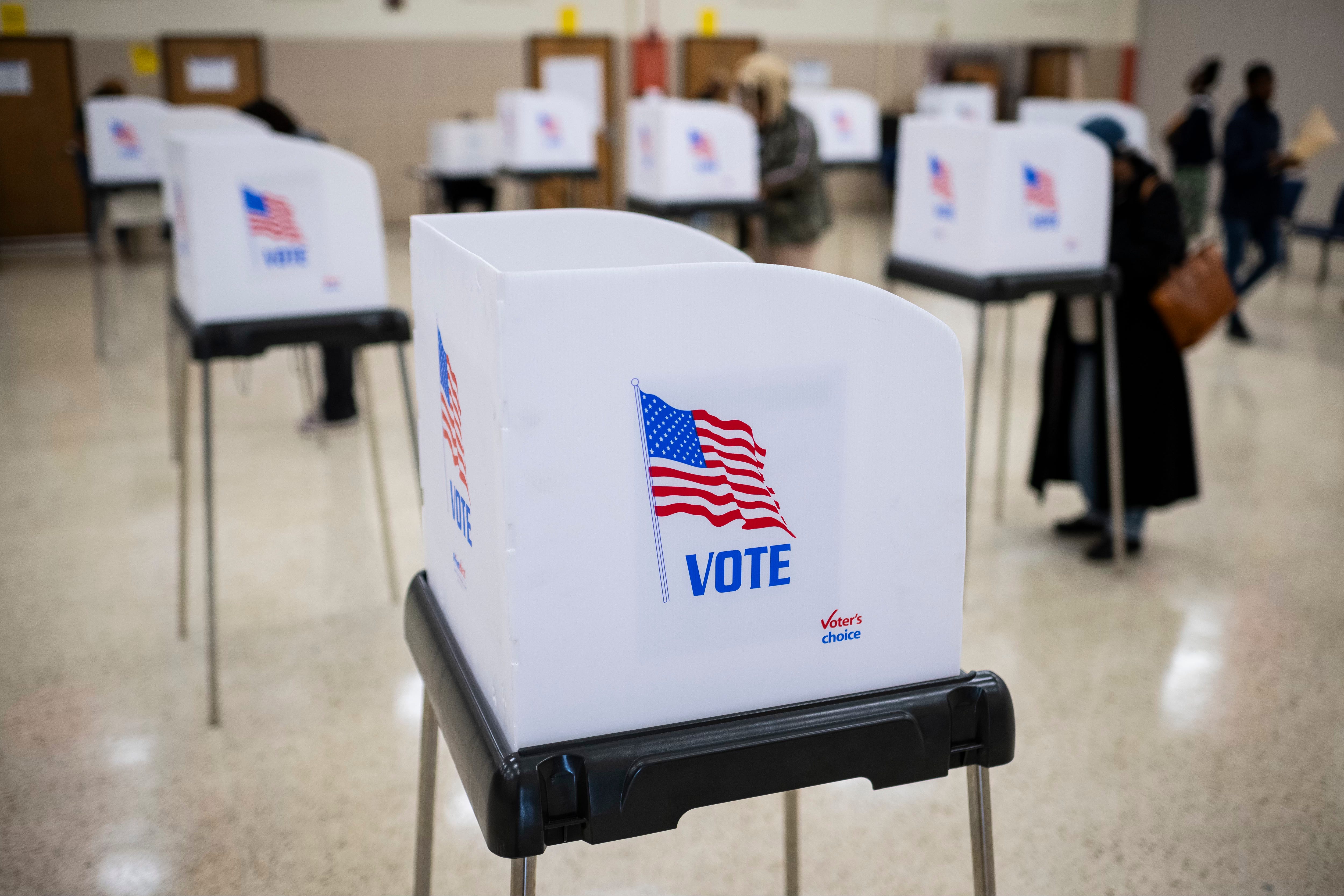
With so much alarming news everyday, it’s easy to lose sight of an ongoing effort by the Trump Administration to undermine our voting rights – the lynchpin for all our rights in a functioning democracy. In recent weeks, President Trump has talked of abolishing vote by mail and demanded voter data from Secretaries of State, many of whom are standing firm against this unlawful demand. As Pennsylvania Speaker of the House Joanna McClinton reminds us in this week’s post, states, not the federal government, are responsible for administering elections. Unfortunately, in many states, Republican leaders are following the Trump playbook and working to restrict access to the ballot. But in Pennsylvania, a critical swing state, Speaker McClinton, who presides over a razor-thin one seat majority, has championed democracy, championing “landmark legislation to make voting easier and more secure.” The midterm elections may seem far away, but the fight to support free, fair and secure elections is happening now. - Debbie Cox Bultan, NewDEAL CEO
Over the past nine months, it seems that threats to our democracy have emerged daily. There has been so much upheaval that it is hard to keep track of the ways Washington is rolling back the rights of some while lining the pockets of others.
Among the most serious threats are ongoing efforts to overhaul elections and introduce sweeping changes—i.e., restrictions—to voting.
Voting is a prime target because it is the purest way for people to have a voice in their government. Limiting voting limits the voice of the people.
Be reassured: elections are not within the Trump Administration’s purview. The Constitution wisely empowers state legislatures with the responsibility to conduct elections. That means state officials, like myself, are on the front lines defending democracy.
As a state lawmaker, I take this role very seriously.
In Pennsylvania, I introduced landmark legislation to make voting easier and more secure. I’ve worked tirelessly to restore public trust in our elections following the 2020 “Big Lie” and to encourage every Pennsylvanian to exercise their right to vote in every election. I have colleagues in states across the country taking similar actions to strengthen trust in our elections, improve access to the ballot, and ensure that every election is conducted fairly and transparently.
Unfortunately, many Republican-led state legislatures have taken the opposite approach. Responding to the president’s demands, they have quickly adopted his playbook to severely restrict voting access and initiate mid-cycle redistricting to reduce Democratic representation in Congress.
The White House, through the Department of Justice, has even demanded that states supply sensitive voter information and has sued eight states, including Pennsylvania, for refusing to provide data such as voters’ full names, birth dates, addresses, driver’s license numbers, and partial Social Security numbers. Seven of the eight states have Democratic governors.
These reckless actions assault one of our nation’s founding principles and further erode public trust in government.
VOTING RIGHTS
Between 2021 and 2024, states enacted more laws to expand voter access than to restrict it. According to the Brennan Center, at least 42 states, plus Washington, D.C., enacted 172 laws expanding voter access, including broadening eligibility for mail-in voting, enhancing voter registration, and restoring voting rights to some formerly incarcerated individuals.
However, according to the Voting Rights Lab, the first six months of 2025 reversed that trend, with not only fewer laws aimed at improving voter access, but also a 50 percent increase in restrictive laws. By June 30 of this year, seven states had enacted new laws to strengthen their existing voter ID requirements.
In Pennsylvania, the state House, with a one-seat Democratic majority, has rebuffed efforts to expand our voter ID law and has advanced my legislation to make voting easier, strengthen election security, and streamline the ballot tabulation process. These are measures widely supported by Pennsylvania voters.
REDISTRICTING.
Legislative redistricting—the process of dividing the population into districts for representation purposes—is another area where state legislatures wield significant power.
Traditionally, state legislative and congressional maps are drawn every ten years following the Census, so this year’s mid-cycle congressional redistricting efforts in Texas, Missouri, California, and other states have drawn considerable attention.
Again, the Pennsylvania House’s one-seat majority can block any Republican-led attempt to redraw our maps mid-cycle. This is good government. The maps Pennsylvania enacted in 2022 are the fairest in a generation and truly reflect the voters’ interests.
WHAT’S NEXT FOR AMERICAN DEMOCRACY?
What does this all mean for the future of voting rights and elections in Pennsylvania and across the country?
First, it underscores how important local elections are. We need to mobilize voters for every election, not just the presidential election every four years. The officials who govern us most closely often have the most significant impact on our day-to-day lives, including mayors, city council members, school board members, and state legislators.
Next, every vote matters. Pennsylvania’s House Democrats have leveraged our razor-thin majority not only to hold the line on harmful public policies, like broadened voter ID requirements and mid-cycle redistricting, but also to advance pro-voter policies, such as early voting.
Finally, everyone must use their voice. In a democracy, voting is power. As civil rights pioneer John Lewis said, voting “is the most powerful non-violent tool we have in a democracy.” It’s more important than ever to do your part by voting and letting your elected officials know how you feel about the issues—they work for you.
Make no mistake: voting rights are under attack. But even amid the bad news, there are glimmers of hope around the country. None of us can afford to abandon our efforts to protect and advance voting rights, because if we do, all our rights will be diminished.